
Everyday Puzzles: Mini Games review
 Analysis by GetAllApps
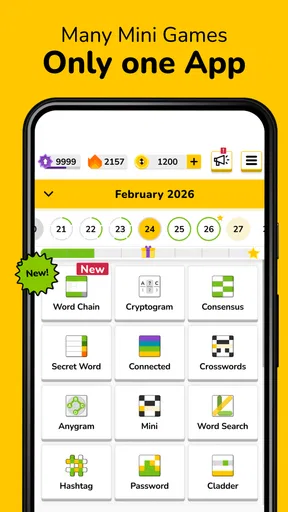
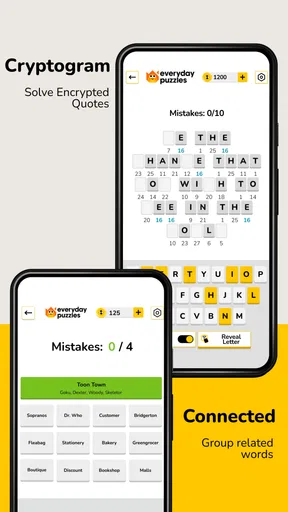
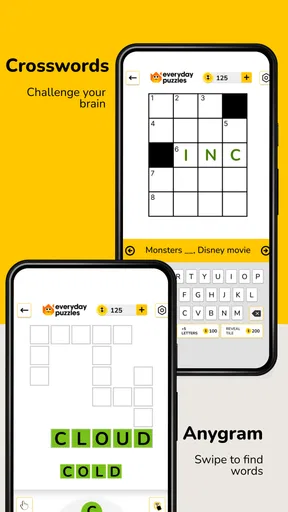
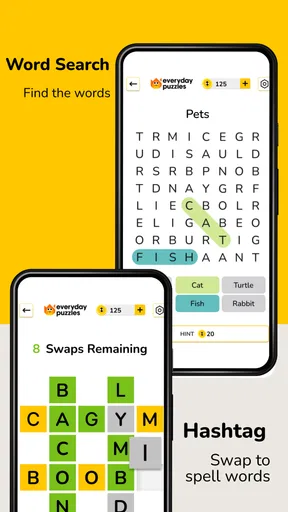
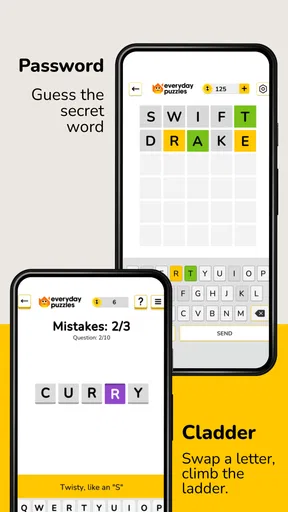
When I want a quick word puzzle without committing to one particular format, I like having several styles in the same place. Everyday Puzzles: Mini Games brings hashtag clues, crosswords, and word searches together in a trivia game from Fanatee, Inc. Its appeal is straightforward: I can switch between different kinds of wordplay when one starts to feel stale. That variety makes it an easy game to consider for a short break, though it is less compelling if you want a deep, single-mode puzzle experience.
What the free entry point gives you
The game is free to install, so you can try its puzzle mix without paying upfront. It also offers in-app purchases, with listed items ranging from $0.99 to $49.99. Those figures describe the available purchase range, not a requirement to pay before playing. I would treat the free access as a way to decide whether the formats suit you, and consider spending only if you find the game’s particular rhythm worth returning to.
The distinction matters because “free” does not tell you how much play you will personally get before considering a purchase. I would not assume that every puzzle or option is included without limits, or that buying something removes every interruption. Instead, start by playing the available content and check the purchase details in the app before confirming anything. That is the sensible approach if you are trying to keep casual gaming free.
There is a wide difference between the lowest and highest listed item prices, so it is worth pausing over the exact item rather than treating in-app purchases as one standard upgrade. If you share a device, keep purchase approval in mind; if you are setting a spending limit, decide it before opening the shop. The game is rated for Everyone, but that age classification does not replace a parent’s choice about whether purchases are appropriate for a child.
As a trivia title, it leans on language and general knowledge rather than fast reflexes. That gives it a gentler entry point than action games, and makes it easy to try in small pockets of free time. Its current version is 13.8.0, and the stated minimum operating-system requirement is version 7.0. The game was released on January 19, 2022, so it is not a brand-new experiment, although those details alone do not tell you how often its puzzles change.
Why the mix can be useful
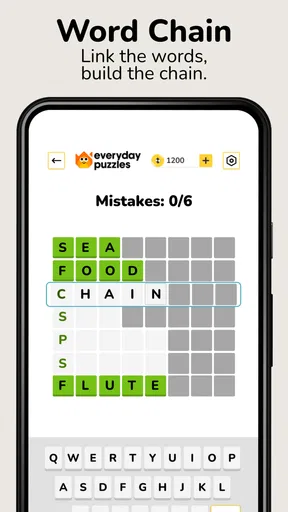
The three formats suit different moods. A crossword asks you to work from clues and intersecting answers; a word search is more about spotting words among letters; hashtag puzzles invite you to connect a clue with a concise phrase. Switching styles is more than a cosmetic bonus: it lets you choose whether you want deduction, visual scanning, or a compact association challenge without leaving the same game.
That makes the app particularly handy when your attention is uneven. On a commute or while waiting for an appointment, I might choose a word search when I want something direct, then try a crossword when I have enough focus to hold clues in mind. A hashtag round can be a middle ground: brief enough for a pause, but still dependent on making a useful connection. This kind of mood-based switching is the strongest practical reason to choose a collection over a dedicated crossword app.
There is also a good way to use the formats as a small routine rather than treating them as interchangeable. If a clue has me stuck, I can move to a different style and return later with a fresher head. That avoids turning a casual session into a frustrating test of persistence. Conversely, if I am in the mood to concentrate, I can stay with crosswords instead of bouncing between modes. The value comes from having a choice, not from needing to play every format in every session.
For a shared break, the different puzzle styles can also make it easier for two people with different preferences to take turns. One person may enjoy scanning a word search while another prefers solving clues. I would not assume that the game has a dedicated multiplayer mode; the practical suggestion is simply to pass the device or compare answers together. That makes the variety useful socially without relying on features the game has not established here.
Its popularity suggests that the concept has found an audience: it has more than ten million installs, an average rating of 4.6, and around 95,000 ratings. Those figures are useful context, but they cannot tell you whether the clue style or puzzle mix will match your taste. I would use them as reassurance that this is an established choice, not as a substitute for trying a few rounds yourself.
Compared with installing separate apps for crosswords and word searches, a combined game is tidier and gives you a quick way to change direction. The trade-off is specialization. A dedicated crossword app may be a better fit if you want your whole experience centered on crosswords, while a broad trivia game may suit you better if you prefer questions across many subjects rather than word puzzles. Everyday Puzzles sits between those options: it focuses on several word-game formats rather than trying to be every kind of trivia.
Where the experience may not fit
Variety can become a weakness if what you want is depth in just one format. Someone who enjoys carefully themed crossword collections, a particular difficulty curve, or a more elaborate puzzle campaign should compare specialist options before settling here. The concise mix is better for casual variety than for a player who wants one mode to provide a sustained, highly focused challenge.
Word games also depend on vocabulary, clue interpretation, and familiarity with the language used in the puzzles. If you are learning a language or playing with someone who has a very different vocabulary, a clue that feels obvious to one person may feel arbitrary to another. That is not unique to this title, but the mix does not remove the basic language barrier. A visual puzzle or a game built around nonverbal challenges may be a more comfortable choice for that situation.
Another trade-off is that switching formats can interrupt concentration. If I am halfway through thinking about a crossword clue, seeing other choices may tempt me to jump away rather than work it through. For a relaxed player that flexibility is welcome; for someone who likes a consistent, uninterrupted challenge, a single-mode game may feel more satisfying. I would choose based on whether variety keeps you engaged or pulls you out of a puzzle.
Purchases are the clearest point where I would be cautious. The existence of items at different price points means it is worth checking what an individual purchase does and whether it suits your budget before tapping to buy. I would not spend just because a game offers optional items. If the free experience already gives you enough variety, there is no reason to treat spending as necessary; if you are considering a purchase, make that decision based on the specific item shown in the app.
The game’s Everyone rating makes it broadly approachable, but “appropriate for everyone” does not mean every player will find it equally easy or engaging. Younger players may need help with unfamiliar words or clues, while experienced puzzle fans may find a casual selection less demanding than they prefer. In both cases, the best test is a short session together before deciding whether it deserves a place on the device.
Who is most likely to enjoy it
I would recommend Everyday Puzzles: Mini Games to people who like wordplay but do not want to choose a single format in advance. It is a sensible match for brief breaks, relaxed evenings, and anyone who enjoys alternating between finding words, solving clues, and making associations. The store’s short description calls it “Everyday Puzzles,” and that captures the practical appeal better than any promise of a marathon challenge: it is designed around easy-to-pick-up puzzle variety.
It is also a reasonable option for someone who is curious about word games but does not yet know whether crosswords or word searches will hold their attention. Trying multiple styles in one game can help you find your preference before you invest time in a specialist app. If the crossword mode is the one you keep returning to, that is a useful signal that a dedicated crossword game could be a better next step.
I would skip it if I wanted a demanding, single-format puzzle with a carefully sustained progression, or if I dislike word-based challenges altogether. I would also look elsewhere if my idea of trivia means broad question-and-answer quizzes rather than solving words. The category label is less important than the actual activity: this is for people who want to work with words, not a general knowledge quiz in the usual question-and-answer sense.
For a parent considering it for a child, the age rating is a helpful starting point, and the purchase range is worth checking before handing over the device. For adults who want a no-cost casual game, the free installation makes it easy to test the fit, but I would still keep the in-app purchase screen in mind. That combination of accessible entry and optional spending is manageable if you approach it deliberately.
My verdict on its value
My recommendation is to try it if you want an easy-to-access collection of word puzzles and value being able to change formats without switching apps. Its mix is the real benefit: a crossword, word search, and hashtag-style puzzle offer distinct ways to use a spare moment. Fanatee, Inc. has built a game with a clear casual audience, and its 4.6 average across roughly 95,000 ratings gives some reassurance that many players enjoy the overall proposition.
I would not call it an automatic buy, because the game is free to start and its in-app items have a substantial price range. Play first, see which mode you actually return to, and only then decide whether any purchase is worth it to you. If the free experience meets your needs, stop there. If you want greater depth in one puzzle type, compare it with a dedicated alternative rather than paying in the hope that variety will turn into specialization.
In short, this is a good fit for a casual word-game player who wants choice and convenience, not for someone seeking a deep puzzle campaign or a conventional trivia quiz. I like its flexibility, but I would judge its value by how naturally its three styles fit into your routine. That is a more useful measure than the number of options on the screen: if you enjoy switching between them, the free starting point makes the game easy to recommend; if you want one mode to absorb you for hours, a specialist title is likely the better choice.
Pros and cons
Pros
- Quick puzzle rounds fit easily into short breaks.
- A variety of mini games keeps the experience from feeling repetitive.
- Simple controls make the puzzles approachable for new players.
- Daily challenges give players a reason to return.
- Many puzzles can be played without a long time commitment.
Cons
- Some puzzles may feel too easy for experienced players.
- Hints can reduce the satisfaction of solving a puzzle unaided.
- Repeated puzzle formats may become familiar over time.
- Progress may feel slow for players seeking a longer campaign.
- Small screen details can be tricky on compact devices.


